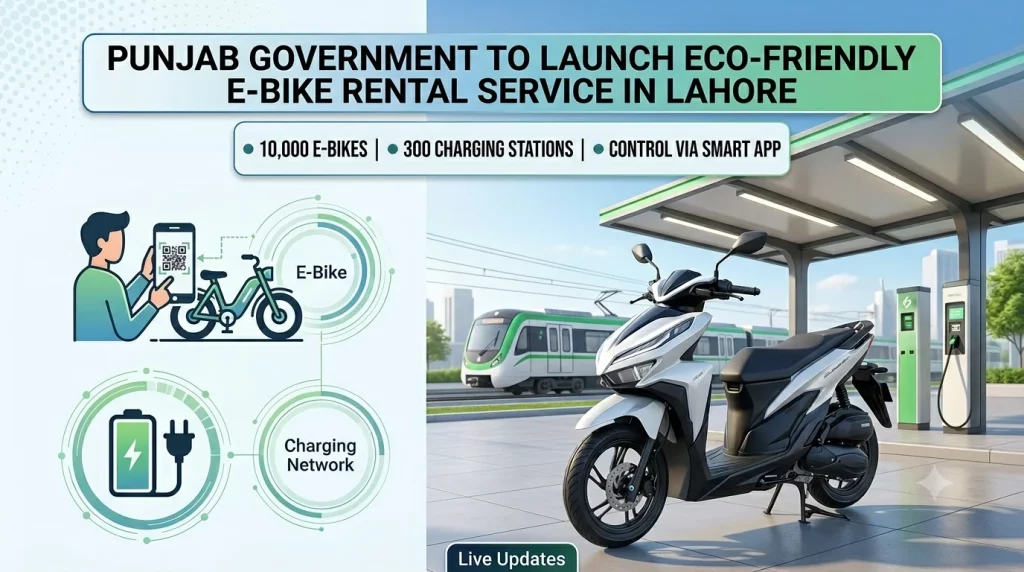
The Government of Punjab has officially announced a brand-new electric bike rental service in Lahore. This modern initiative is a major step toward building a sustainable, eco-friendly, and tech-driven public transport system in the provincial capital.
As urban population growth and traffic congestion continue to rise, this green energy project aims to provide an affordable, accessible, and clean commuting alternative for millions of residents, including students, office workers, and daily laborers.
The Vision Behind Lahore’s E-Bike Rental Project
Lahore, one of the most populated cities in Pakistan, has been battling severe environmental challenges, particularly smog and air pollution, over the last few years. The introduction of electric vehicles (EVs) into the public transport sector is a strategic move to counter these issues.
According to official sources, the core objective of this project is to reduce the carbon footprint of urban commuting. By replacing traditional petrol-powered motorcycles with zero-emission electric bikes, the government expects to lower carbon emissions by thousands of tonnes every year.
Phase 1 Fleet Deployment: 10,000 Electric Bikes Across Lahore
To guarantee operational efficiency, smooth fleet management, and public accessibility, the transport department is implementing a structured, multi-phase rollout strategy.
Massive First-Phase Fleet Size
In the highly anticipated Phase 1 of the launch, a massive fleet of 10,000 premium electric bikes will be officially deployed across the main arterial roads and commercial sectors of Lahore. This large-scale availability ensures that users will never have to wait long to find an available ride during peak hours.
Technical Specifications of the E-Bikes
The electric bikes selected for this rental program are specifically built for rugged urban conditions. They feature:
- High-capacity Lithium-Ion batteries for extended mileage.
- Regenerative braking systems to conserve power during stop-and-go traffic.
- Robust, weather-resistant build quality optimized for Lahore’s extreme summer heat and monsoon rain.
- Speed limiters to ensure rider safety on busy metropolitan roads.
Infrastructure Setup: 300 Smart E-Bike Charging and Docking Stations
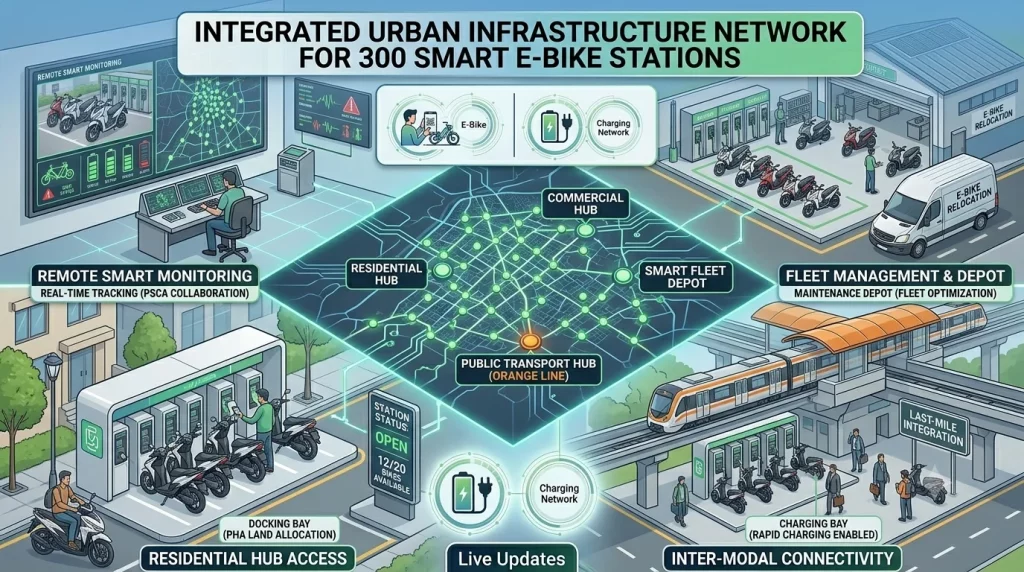
A sustainable electric transport network requires a powerful infrastructure framework. To support the massive 10,000 electronic vehicle fleet, the government has finalized plans to construct approximately 300 dedicated e-bike charging and docking stations throughout the provincial capital.
How to Use the Electric Bike Rental Mobile App?
Following the successful models of smart cities in Europe and East Asia, Lahore’s rental system will run entirely on a centralized, paperless digital architecture. Users will manage their complete journey via a high-tech electric bike rental mobile app.
Step-by-Step User Process of Electric Bike Rental Mobile App:
- Account Registration: Citizens will download the official mobile application and register using their valid Computerized National Identity Card (CNIC) and driving credentials for verification.
- Real-Time GPS Location: The app’s interactive map will show the exact location of the nearest e-bike docking station and the real-time battery percentage of available bikes.
- Scan to Unlock: Upon reaching the docking hub, the commuter simply scans a secure QR code on the e-bike’s handlebars using their smartphone camera to unlock the vehicle.
- Digital Payments: The digital wallet integration supports easy, cashless transactions through JazzCash, EasyPaisa, credit/debit cards, and direct bank transfers.
Inter-Departmental Synergy: Government Collaborations for Project Execution
Executing a large-scale urban development project requires seamless coordination among various administrative wings. The Punjab government has formed a powerful inter-departmental consortium to handle different operational aspects of the e-bike ecosystem:
- Punjab Housing Authority (PHA): PHA has been tasked with identifying and allocating prime government land free of cost for the setup of the 300 charging hubs.
- Lahore Parking Company (LePark): LePark will manage the designated parking zones and security parameters around the e-bike docking areas.
- Punjab Transport Department: This regulatory body will formulate the legal framework, license checking mechanisms, and standardized affordable tariff models.
- Punjab Safe Cities Authority (PSCA): To tackle security concerns, every major docking station will be directly linked with the PSCA central command center. High-definition CCTV cameras, anti-theft GPS trackers embedded in the e-bikes, and geo-fencing software will be deployed to eliminate any chances of theft, vandalism, or vehicle misuse.
Resolving Last-Mile Connectivity in Lahore’s Mass Transit System
One of the greatest challenges facing Lahore’s public transport is “last-mile connectivity”—the difficulty commuters face when trying to travel from a major bus or metro train station to their exact final destination (office, university, or home).
The geographical mapping of the e-bike charging stations is intentionally optimized to bridge this operational gap. Docking stations will be placed immediately outside major mass transit terminals, including:
- The Lahore Metrobus corridors.
- The Orange Line Metro Train (OLMT) stations.
- Major commercial markets like Anarkali, Gulberg (Main Boulevard), Barkat Market, and DHA.
This integration creates a cohesive, multi-modal transport network. A student can exit the Orange Line Train, unlock an e-bike at the terminal gates, and ride directly to their university campus within minutes, bypassing congested local traffic and expensive rickshaw fares.
Conclusion
If Phase 1 delivers the expected public success in Lahore, the administration plans to scale the model to other highly populated metropolitan cities across the province including Rawalpindi, Multan, and Faisalabad. This project is a definitive step forward in transforming Lahore into a cleaner, greener, and smarter city for generations to come.